
.svg)
.svg)
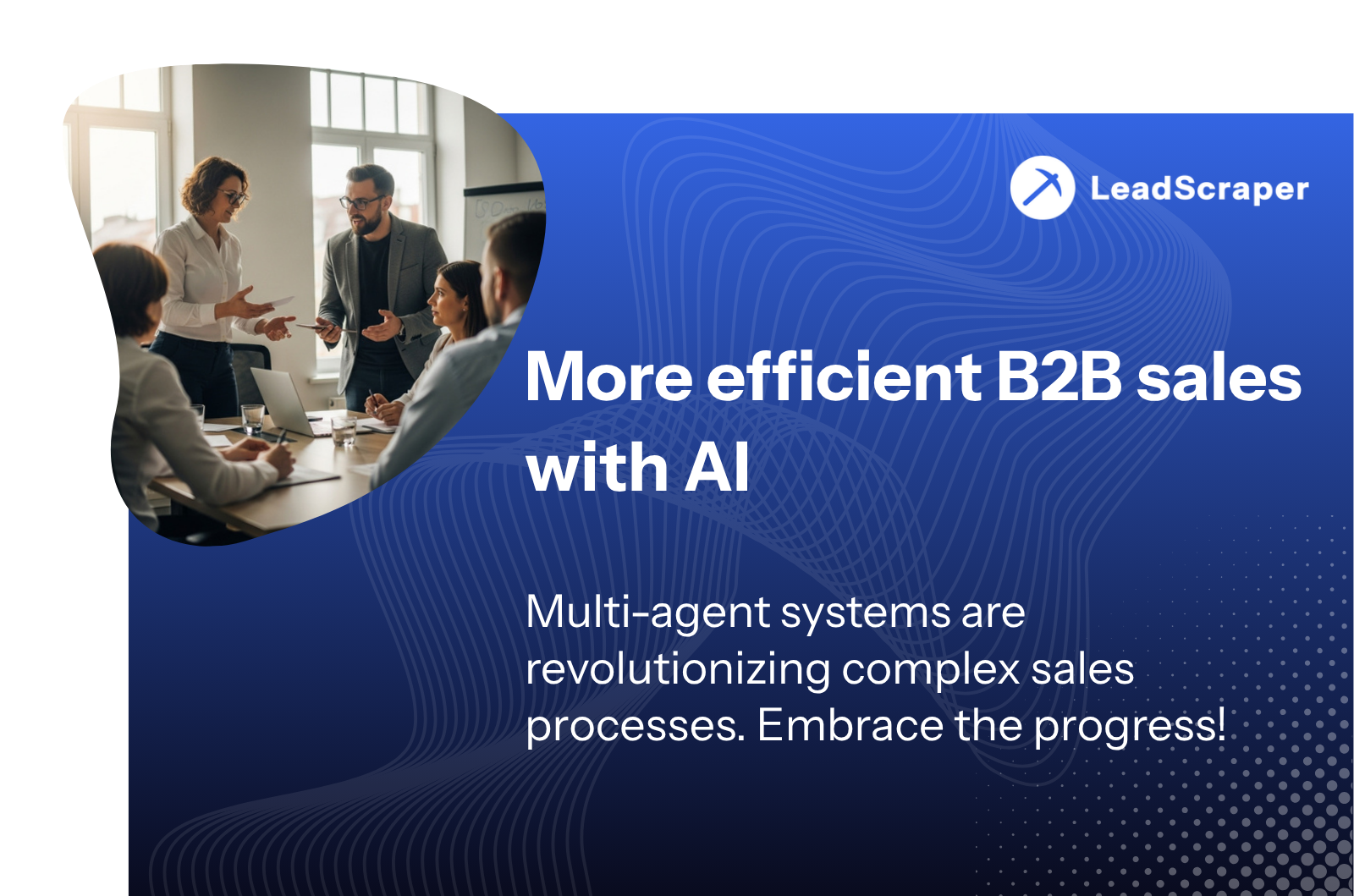
Multi-Agent Systems for Complex Sales Processes: Optimization and Implementation Made Easy
%2520(7).jpeg)
Generate B2B Leads with AI?
With LeadScraper, you create suitable B2B lists in seconds. 100% GDPR compliant. No subscription required!
CREATE TEST ACCOUNTMulti-Agent Systems for Complex Sales Processes: Optimization and Implementation Made Easy
Intelligent Automation as a Key to Modern B2B Sales
Digitalization presents new challenges for B2B sales: sales cycles are becoming more complex, potential customers expect personalized communication across many touchpoints, and data volume is constantly growing. Companies that want to sales process scale and optimize quickly reach their limits with traditional methods. Multi-Agent Systems offer an innovative solution – they automate tasks, orchestrate collaboration between sales, marketing, and service, and thus lay the foundation for a sustainable increase in efficiency in B2B sales.
What are Multi-Agent Systems?
Multi-Agent Systems consist of multiple, usually AI-based software agents. Each agent independently performs a specific task, can communicate with other agents, exchange information, and make its own decisions. In the context of sales and lead generation, this means: agents analyze data, identify leads, qualify contacts, manage automated outbound activities, and maintain CRM systems. This systematic, intelligent networking makes it possible to automate complex sales processes and continuously optimize them.
Relevant Application Areas in B2B Sales
- Lead Generation: Agents capture and evaluate prospects from various sources (e.g., website, social media, events) and prioritize them for sales.
- Outbound & Acquisition: Automated contact via email, LinkedIn, or phone – including personalization and coordination of follow-ups.
- Sales Automation: Handover of qualified leads to sales teams, appointment scheduling, quote management, and automated follow-up.
- CRM Integration: Agents update customer data, identify cross-selling and upselling potential, and provide recommendations for next steps.
- Data Analysis & Lead Scoring: AI Agents analyze lead behavior, assess closing probabilities, and support pipeline optimization.
- Social Selling: Assistance in identifying relevant contacts, automated network nurturing, and monitoring engagement data.
- Sales Reporting: Agents automatically generate reports, provide insights, and visualize key KPIs for management.
Benefits of Multi-Agent Systems for Sales
- High Scalability: Automated processes can be flexibly adapted to increasing demands and changing market conditions.
- Faster Sales Cycles: Real-time data analysis and automated workflows accelerate the processing of leads and opportunities.
- Error Reduction and Consistency: Routine tasks are performed reliably and consistently, which improves data quality.
- Resource Efficiency: Sales representatives can focus on advisory tasks, while agents handle repetitive activities.
- Efficient Lead Scoring: Data-driven evaluation increases closing probability and the quality of the sales pipeline.
- Improved Collaboration: All relevant information is centrally available in the CRM system, enabling seamless collaboration between sales, marketing, and service teams.
- Transparent Processes: Automated processes are traceable, documented, and provide a solid basis for continuous optimization.
Implementation: How to Get Started with Multi-Agent Systems
The successful implementation of multi-agent systems in B2B sales begins with a thorough analysis of existing sales processes. Companies should first define which tasks are to be automated and which goals are to be achieved – such as increasing lead quality, reducing processing times, or improving sales team utilization.
- Process Analysis: Identify bottlenecks and recurring tasks in lead generation, outbound, CRM maintenance, and reporting.
- Tool Selection: Choose platforms and tools that can be integrated into your existing system landscape (e.g., Salesforce, HubSpot, Pipedrive). Look for open interfaces and high flexibility.
- Pilot Projects: Start with clearly defined use cases, such as automated lead qualification or intelligent follow-up management.
- Change Management: Involve all relevant stakeholders early on to build acceptance and facilitate knowledge transfer.
- Data Protection & Compliance: Ensure that all automated processes comply with GDPR and that sensitive customer data is protected.
A step-by-step approach – from initial pilot projects to scaling to other sales areas – reduces risks and enables continuous optimization.
Best Practices: Success Factors for Multi-Agent Systems in Sales
- Close CRM Integration: Agents should seamlessly integrate with your CRM system to ensure a centralized data foundation and consistent workflows.
- Ensure Data Quality: Only with consistent, up-to-date, and complete data can AI-powered agents achieve precise results and recommendations.
- Clearly Defined Processes: Automated processes must be transparent, documented, and traceable at all times.
- Monitoring & Continuous Optimization: Regularly analyze agent performance, adjust algorithms and workflows, and use the insights gained for process improvement.
- Training & Enablement: Sales and marketing teams benefit from targeted training on how to work with agent results and the new, automated processes.
- Implement Feedback Mechanisms: Ensure that employees can provide feedback and that suggestions for improvement can be incorporated into system development.
- Regular Technology Updates: Monitor technological trends and regularly evaluate whether new features or agent models can add value.
Challenges and Solutions in Implementation
The implementation of multi-agent systems brings various challenges – from Data Privacyand compliance issues, to technological complexity and change management.
- Data Protection & IT Security: Ensure secure data processing, role-based access rights, and regular audits.
- System Integration: Minimize siloed solutions and ensure that all relevant tools and platforms can communicate with each other.
- Acceptance & Corporate Culture: Prevent team anxieties through early involvement, transparent communication, and training opportunities.
- Technological Complexity: Utilize external consulting or specialized implementation partners to overcome challenges in selecting and integrating new systems.
- Iterative Introduction: Pilot projects and gradual scaling help minimize risks and gather experience.
Examples of Multi-Agent System Applications in B2B Sales
- Personalized Outbound Campaigns: A software company uses multi-agents to send personalized emails to different buyer personas, coordinate follow-ups, and automatically log reactions in the CRM.
- Automated Lead Scoring: An industrial service provider uses AI agents, which evaluate website behavior, interactions, and CRM data to prioritize leads by likelihood of conversion and hand them over to the sales team in a targeted manner.
- Social Selling Automation: A consulting firm uses agents to identify relevant contacts on LinkedIn, analyzes engagement patterns, and assists in network maintenance.
- Self-service offerings in after-sales: Agents automatically answer common customer questions and efficiently forward more complex inquiries to sales.
Outlook: Multi-Agents as a Catalyst for Data-Driven Sales
Multi-agent systems are increasingly becoming the standard in B2B sales. They enable data-driven decisions, improve collaboration between sales, marketing, and service, and help companies adapt flexibly to market changes. Especially in the context of AI and machine learning, new opportunities are emerging for automation and personalization along the entire customer journey. Companies that adopt these technologies early on secure a decisive competitive advantage and lay the foundation for sustainable growth.
Conclusion: Intelligent Automation as a Success Factor in B2B Sales
The optimization of complex sales processes through multi-agent systems is long since a reality and not a distant future trend. Those who intelligently link automation, CRM integration, and data-based decisions create the foundation for efficient, scalable, and future-proof sales. Companies benefit from accelerated sales cycles, higher closing rates, and a sustainable increase in sales performance.
FAQ: Frequently Asked Questions about Multi-Agent Systems in B2B Sales
- How does a multi-agent system differ from traditional automation?
Unlike static automations, agents react dynamically to changes, continuously learn, and optimize processes independently – especially in conjunction with CRM and sales data. - Do multi-agent systems always require Artificial Intelligence?
Many agents use AI, for example, for data analysis and decision-making. However, there are also rule-based approaches for less complex tasks. - How long does implementation take?
This depends on the complexity of existing sales processes, the system landscape, and the chosen use case. Pilot projects can often be implemented within a few weeks. - How are data privacy and compliance ensured?
Compliance requirements can be met through clear policies, encryption, role-based access, and regular audits. - Can existing CRM systems be easily integrated?
Modern multi-agent platforms offer open interfaces that enable integration with common CRM solutions like Salesforce, HubSpot & Co.