
.svg)
.svg)
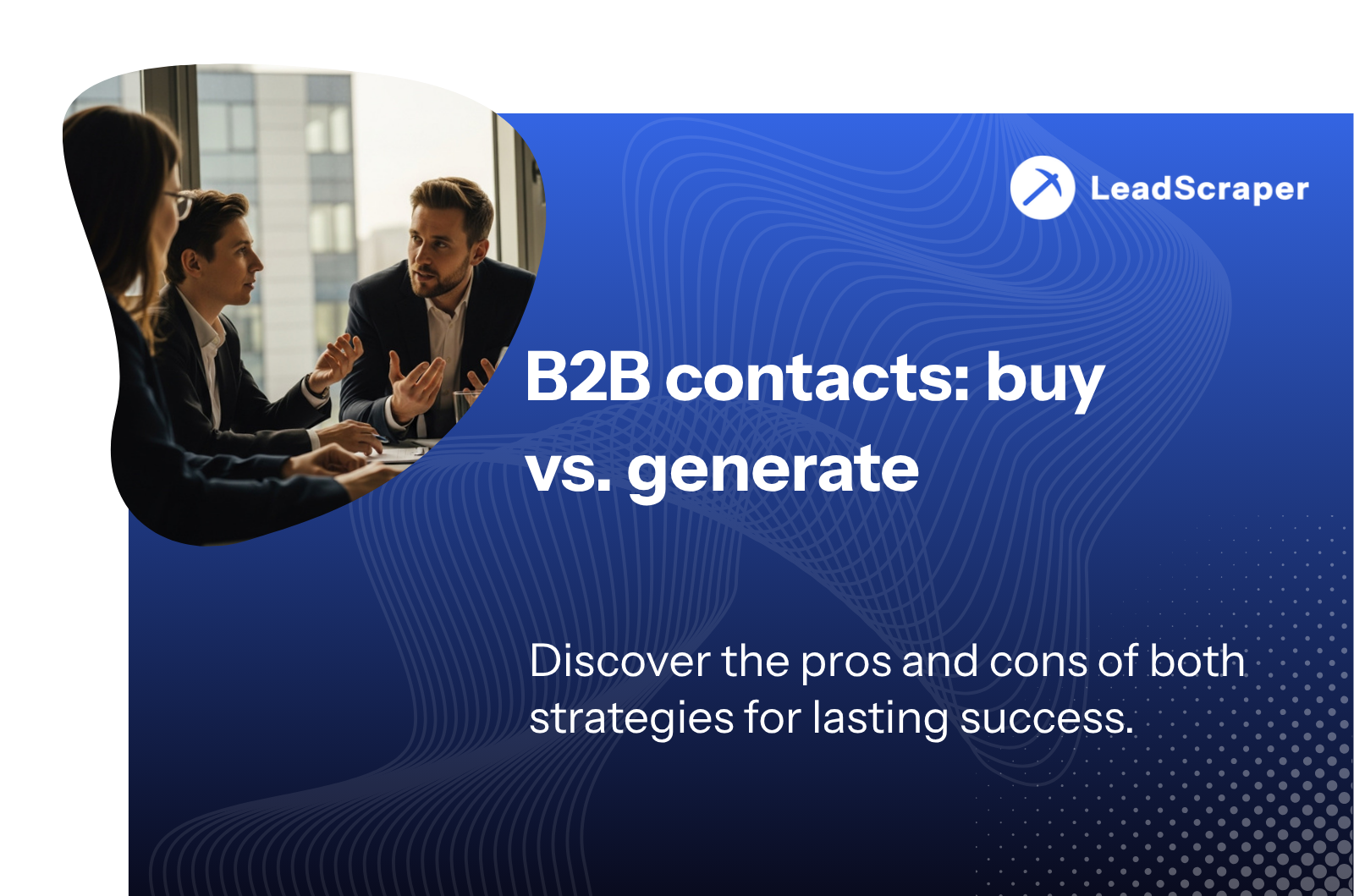
Buying B2B contacts vs. generating them yourself: Pros and cons at a glance
%2520(7).jpeg)
Generate B2B Leads with AI?
With LeadScraper, you create suitable B2B lists in seconds. 100% GDPR compliant. No subscription required!
CREATE TEST ACCOUNTIn B2B sales, almost everything depends on the quality of your contacts. Whether you want to acquire new customers, develop existing ones, or leverage cross-selling potential – nothing works without a stable pipeline of high-quality leads. The crucial question is: Do you buy contacts or generate them yourself?
Both approaches have their merits, and the right answer depends on your market, resources, and sales goals. This article honestly compares both approaches – with practical recommendations.
- Bought B2B contacts deliver volume quickly, but they often have low quality and GDPR risks, especially in the DACH region.
- Self-generated leads take more time, but convert much better and build your own legally sound data foundation.
- The best strategy is a combination: buying for short-term needs, self-generation for sustainable growth.
Buying B2B Contacts: Opportunities, Risks, and Best Practices
Buying B2B contacts can quickly provide new leads for outbound campaigns or sales initiatives. Providers promise large, segmented contact lists that you can filter by industry, position, or company size. However, caution is advised: This method should be used judiciously – for qualitative and legal reasons.
Pros of buying contacts:
- Quick availability of large quantities of contacts for outbound sales
- Relieves the sales team from time-consuming initial research
- Easy segmentation by target groups – industry, region, hierarchy level
- Enables short-term sales campaigns, for example, during product launches or sales slumps
Cons of buying contacts:
- Quality and up-to-dateness of data often unclear, risk of outdated information
- High wastage and low relevance of leads
- GDPR risks in the DACH region, which can lead to fines
- Low response and conversion rates because recipients show no genuine interest
- No basis for sustainable relationship management
Practical tip: Carefully vet potential list providers and demand transparent information about the data source. Data quality spot checks and GDPR compliance are indispensable in the DACH region – a violation can cause not only legal but also reputational damage.
Generating Your Own B2B Contacts: Methods, Benefits, and Challenges
Generating your own leads aims to build an individual, high-quality, and legally compliant contact base. You combine various inbound and outbound strategies to identify, qualify, and develop potential customers throughout the entire customer journey.
Typical methods for B2B lead generation:
- Inbound Marketing: Building visibility through SEO-optimized content, whitepapers, webinars, case studies, and blog articles
- Outbound Prospecting: Direct outreach via email, LinkedIn Social Selling or targeted outbound campaigns
- Lead Magnets: E-books, checklists, or exclusive resources for lead generation on your own website
- Events and Networking: Attending trade shows, industry conferences, and online events for personal networking
- CRM-supported Lead Nurturing: Systematic capture, qualification, and follow-up of contacts in the CRM system
Why generate your own leads:
- Higher relevance and quality of contacts through targeted outreach and qualification
- Better conversion rates, as leads show genuine interest and are already pre-qualified
- Long-term establishment of your own, GDPR-compliant lead database in the CRM
- Enhanced customer retention through continuous communication
- Full control over the lead generation process
Arguments against in-house lead generation:
- Increased time and staffing requirements in the initial phase
- Investments in content, marketing automation, and sales technology required
- Longer lead time until tangible sales success, especially with inbound strategies
Practical example: A medium-sized IT service provider relies on a combination of blog articles, webinars, and LinkedIn campaigns. Using a modern CRM system, the sales team specifically follows up with prospects and develops them into long-term customers. The leads acquired this way show a significantly higher closing rate than purchased contacts.
Direct comparison: When is each strategy beneficial?
| Kriterium | Kontakte kaufen | Selbst generieren | LeadScraper |
|---|---|---|---|
| Geschwindigkeit | Sofort verfügbar | Aufbau dauert Monate | Innerhalb von Minuten |
| Datenqualität | Oft veraltet | Hoch (selbst qualifiziert) | Frisch aus öffentlichen Quellen |
| DSGVO-Konformität | Risiko vorhanden | Vollständig konform | Nur öffentliche Quellen |
| Conversion-Rate | Niedrig | Hoch | Hoch (zielgruppenpräzise) |
| Aufwand | Gering (initial) | Hoch (initial) | Gering (KI übernimmt Recherche) |
Best practices for successful B2B sales
If you purchase contacts, these guidelines apply for responsible handling:
- Only choose providers with transparent data origin and GDPR compliance
- Conduct regular quality checks and spot checks of the lists
- Segment the contacts according to clear sales objectives – industry, company size, region
- Combine purchased contacts with personalized outbound campaigns to increase response rates
If you generate leads yourself, you should keep the following in mind:
- Invest in high-quality, search engine optimized content that provides concrete answers for your target audience
- Implement a powerful CRM system for structured lead nurturing. How Data Enrichment it helps to better qualify contacts is explained in a separate article
- Utilize automation solutions for outbound outreach, lead nurturing, and follow-ups
- Continuously analyze the performance of your lead sources and adapt your strategy based on data
From practice: Companies that Social Selling strategically integrate into the sales process report significantly higher engagement rates and a stronger positioning as trusted contacts for their target customers.
Conclusion: The Right Balance for Sustainable Sales Success
The choice between buying B2B contacts and generating them yourself is not an either-or decision. In the short term, purchased contacts can help fill the pipeline – in the long term, there's no getting around structured, independent lead generation. Companies that strategically combine both approaches and rely on professional processes, CRM integration, and GDPR-compliant methods secure a clear competitive advantage. Continuous measurement is crucial: Only those who know which source delivers better leads can allocate their budget effectively.
How do I identify reputable providers of B2B contacts?
Reputable providers disclose their data sources, operate in compliance with GDPR, and offer current, segmented data highly relevant to your target audience. Always request a sample before purchasing and manually check the data quality.
What role does the CRM system play in the lead process?
The CRM is the central platform for capturing, qualifying, and tracking leads. It enables personalized communication and provides data for the entire sales funnel – without a CRM, the foundation for systematic lead generation is missing.
How do I measure the quality of self-generated leads?
Relevant key figures include conversion rates, close rates, lead-to-customer times, and sales funnel engagement. Regular performance analyses provide important insights for optimization. Also, systematically compare which lead source delivers the highest return.
What are common mistakes when buying B2B contacts?
Unverified lists, lack of segmentation, disregard for data protection, and purely volume-driven outbound campaigns often lead to low success rates and legal risks. In the DACH region, the GDPR risk must be taken particularly seriously.
What trends are shaping B2B lead generation today?
Content-based lead generation, Social selling on LinkedIn, data-driven outbound strategies, and the targeted use of AI research tools are shaping modern B2B lead generation. Those who embrace these developments early gain a measurable advantage.