.svg)
Generate Catering Company Address Lists
Reach catering companies with precision — using filters for event, corporate, or contract catering and region.
Generate B2B Leads with AI?
With LeadScraper, you can create relevant B2B lists in seconds. 100% GDPR compliant. No subscription!
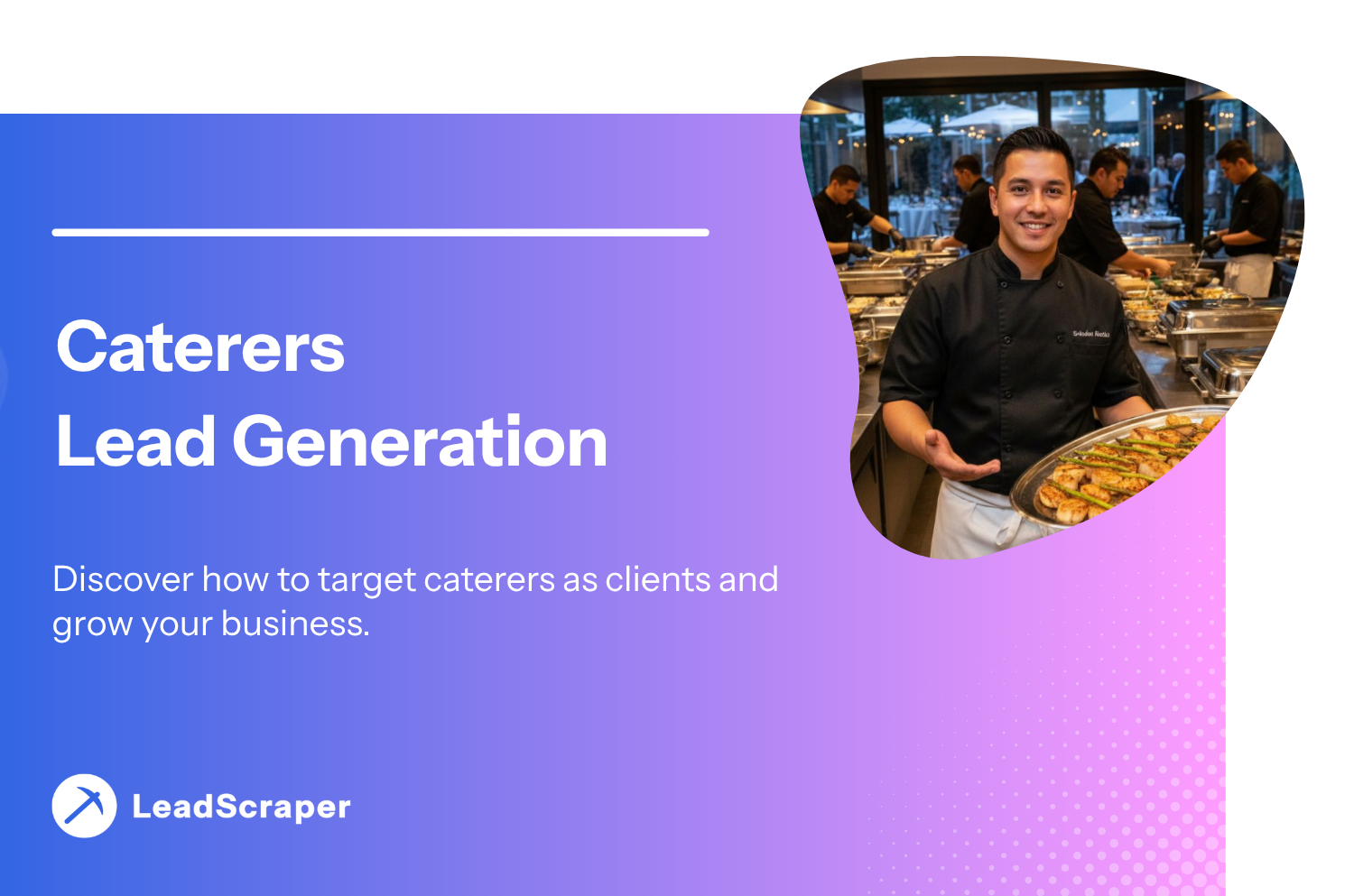
CREATE TEST ACCOUNTCatering companies are a multifaceted industry in 2026, straddling event services, business dining, and institutional food service. With around 10,000 catering companies in Germany — heavily fragmented between event, business, and system catering — you need a list that separates catering type, volume, and specialization. A generic 'caterers DE' list mixes wedding boutiques with Aramark branches — completely different buying worlds. This page shows how to build a catering company address list that gets results.
- In Germany, according to BVBC and industry reports, approximately 10,000 catering companies are active — heavily fragmented between event, business, and system catering.
- A strong address list filters by catering type, volume, and specialization — event service, business lunch, and system caterers are three different worlds.
- LeadScraper finds caterers via free-text prompt with catering type, region, and specialization — in under 60 seconds.
Who Needs Catering Company Address Lists and Why
Caterers are an attractive B2B target group with high food and equipment purchasing volumes, regular consumables demand, and event-driven business cycles. If you sell kitchen equipment, food packaging, specialty ingredients, catering software, or staffing services, a well-filtered catering list is your direct lever.
Packaging providers (bio-packaging trend, reusable boxes for business lunch), staffing agencies for event personnel, and food wholesale platforms also gain when the list properly separates catering type and volume. For cross-references, check the pages on Restaurants, Beverage Distributors und Event Agencies.
Understanding Catering Companies as a Target Group
The industry roughly divides into four worlds. First, event caterers with 5-30 employees and seasonal peaks — weddings, conferences, galas. Second, business lunch and canteen caterers with steady daily volume. Third, system caterers (Sodexo, Aramark, Apetito) with enterprise contracts. Fourth, specialty caterers — vegan, kosher, halal, BBQ — with high brand identity and niche premium.
From my experience, one point is underestimated. Sustainability and vegan concepts are the strongest pitch anchors in 2026. ESG reporting requirements force larger employers to document their canteen sustainability — caterers that deliver here need tools, ingredients, and packaging to match.
Here's what the ideal catering order workflow looks like.
Qualify Inquiry
Headcount, date, location, budget. First selection based on volume and occasion type.
Concept and Menu
Vegan-vegetarian share, allergen documentation, product range. Concept draft in 24-48 hours is industry standard.
Costing
Cost of goods, staff hours, equipment rental. Margins in catering services are 15-35 percent — costing tools are a direct value lever.
Logistics and Equipment
Refrigerated transport, buffet equipment, staff tour planning. This is where the largest operational cost block runs.
Execution and Service
On-site setup, service, breakdown. Service quality determines follow-up orders.
What Data You Need in Your Address List
A simple 'caterer' column is worthless in 2026. A useful catering address list requires the following fields.
- Company name, owner, location, and delivery radius
- Catering type mix (event, business lunch, canteen, system)
- Volume category (boutique 10-50 pax, mid-size 50-500, enterprise 500+)
- Specialization (wedding, conference, vegan, kosher, halal, BBQ specialty)
- Catering software in use (Bizerba, Delicious Data, own ERP)
- Equipment stack (own kitchen, rental kitchen, refrigerated transport)
- Owner and head chef email (not info@)
- Current job postings for chefs or service staff as a growth signal
From my experience, catering type and volume are the two most important filters. An event boutique with 10-50 pax and a system caterer with 5,000 daily meals are different planets.
How to Find Catering Companies in LeadScraper
LeadScraper works with semantic free-text prompts instead of rigid industry codes. Three concrete use cases.
| What You Offer | Prompt in LeadScraper | Who Ends Up on the List |
|---|---|---|
| Kitchen Equipment | "Mid-size caterers in DACH with 20 to 80 employees, own professional kitchen, and event focus" | Mid-sized caterers with equipment investments |
| Bio or Reusable Packaging | "Business lunch and canteen caterers in DACH with sustainability focus and ESG reporting requirements" | Caterers with ESG reporting requirements |
| Specialty Ingredients — Vegan or Allergen-Free | "Event caterers in DACH with vegan or kosher focus and at least 50 events per year" | Specialty caterers with margin pressure |
The advantage shows especially with specialists. Halal caterers, BBQ specialty providers, and kosher event services all have very specific equipment, ingredient, and packaging needs — generic lists miss them entirely.
Common Mistakes with Catering Company Address Lists
Three mistakes that really only backfire in this industry.
- Calling during summer and wedding season: May through September is peak event season with 6-day weeks. Caterers have no bandwidth for sales calls. October through March is outreach season.
- Pitching event caterers with a system caterer approach: Wedding service boutiques buy different equipment classes than Apetito system caterers. Pitch must match.
- Reaching out locally to corporate branch locations: Sodexo, Aramark, and Apetito branches don't decide on tools and food locally — procurement sits at headquarters.
Avoid these three mistakes and you've captured the biggest gains. The rest comes down to clean execution and a solid cold email outreach setup.
Research Catering Companies with LeadScraper
LeadScraper combines free-text prompts with semantic filtering, ideal for catering companies, since catering type, specialization, and volume are rarely captured in standard industry directories.
An example prompt:
"Mid-size event caterers in NRW and Hesse with 25 to 80 employees, wedding and conference focus, own professional kitchen."
The tool searches catering websites, BVBC member lists, job postings, booking portals, and review pages — and returns a filtered list in under 60 seconds with owner contact and plausible catering type assignment. Anyone wanting to stay GDPR-compliant should stick strictly to publicly available catering company data.
Conclusion
An address list for catering companies is only as strong in 2026 as its catering type and specialization filtering. Event boutiques, business lunch providers, and system caterers are three separate worlds. Sustainability pressure, vegan demand, and ESG reporting drive tool and packaging investments — providers who hit the right segment with the right pitch build pipeline fast.
Short & Sweet
Let AI agents work for you 24/7


LeadScraper: AI-powered B2B leads that truly convert. GDPR compliant. Results-driven.
Still have questions? Feel free to contact us at info@leadscraper.uk